I just love presenting and telling stories about tech in general and AI/ML in particular. But I despise making the slides. I’m a perfectionist about narrative, which means the visuals can’t just be “good enough.” They have to be surgically aligned with the story. They have to look like art. They have to feel like I’m walking into battle with a sword, not a half-baked crime scene made with Canva. My hatred is so deep my brain tries to file a resignation letter in my sleep.
I’ve tried every trick to speed it up while pushing quality through the roof. I use Manus for that, and it works, but the token burn rate is basically “sell a kidney, then lease the other one”. It produces great results, but at horrifying economics.
So I went hunting for a cheaper alternative.
And I found it.
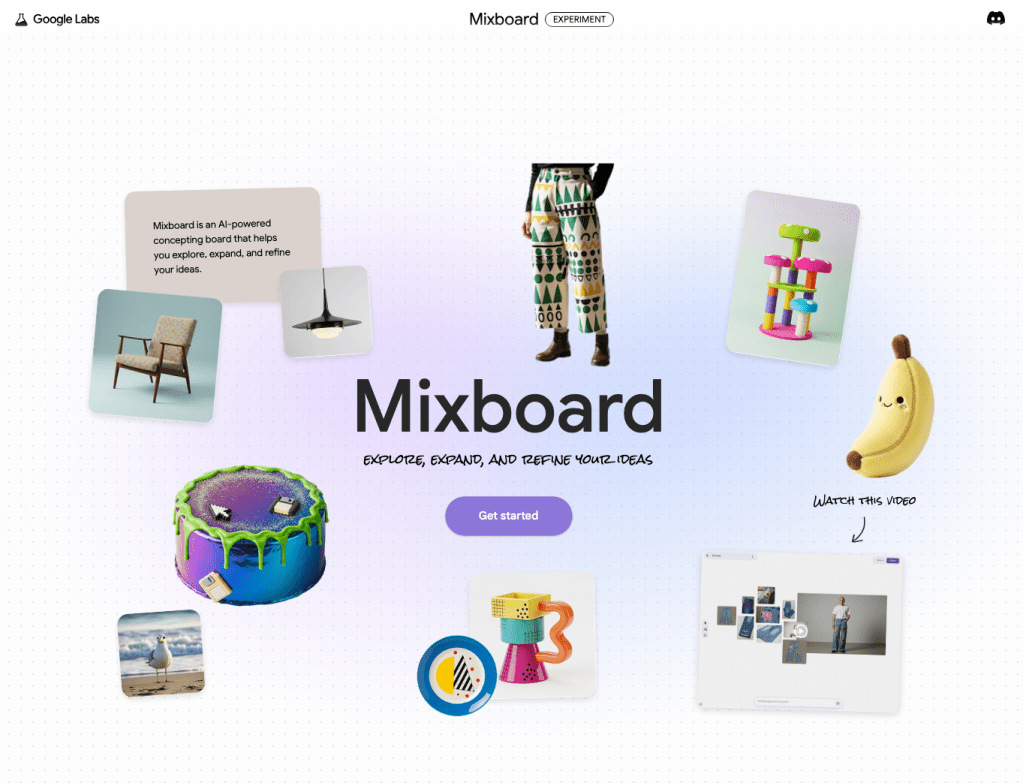
I took Google’s new Mixboard thingy for a spin, you know, the one stuffed with Nano Banana Pro, and it did what every “productivity” tool promises to do. It tried to remove my suffering from the workflow, and it kinda succeeded. I now refer to this experience as my December 2025 Protocol, a.k.a. my style straitjacket.
Mixboard is a little content hoarder. You log into your Google account, open Mixboard in a Chromium browser, and you either click a sample or start a fresh project. Firefox gets treated like the awkward friend doing a drunk toast at a wedding (technically invited, afterwards socially ignored), so stick to Chrome (Edge is fine too, if you enjoy living dangerously).
More rants after the messages:
- Connect with me on Linkedin 🙏
- Subscribe to TechTonic Shifts to get your daily dose of tech 📰
- Please comment, like or clap the article. Whatever you fancy.
And yes, it uses the Banana Pro version.
And Pro means dough. That rhymes and so does cash and ash and that is what it feels like when having to pay the piper each month.
Nano Banana Pro is the bigger banana with the bigger ego. The original Nano Banana showed up in the wild somewhere in August this year, went viral, and suddenly I find versions of my photo’s doing stuff I never did irl. And now the Pro version is here since November this year, and it has the new Gemini 3 Pro under the hood with “real-time world knowledge” energy in its eyes. It does way better at infographics and text rendering, so yeah, t can finally spell more than one word without turning your diagram into a haunted Sudoku.
Google’s pitch is actually very simple.
You want hyperreal visuals, accurate labels, readable paragraphs, multilingual text, and the ability to build complex explainers without crying into your keyboard. And Nano Banana Pro wants to do that, but it wants credit for it alas. Quid pro quo, so you always get this nasty lil’ mark in the right lower corner. But if you’re annoyed with that (like I am), there’s a solution for that as well, and it’s called ChatGPT. Especially with their latest image model, you ask it to remove Google’s watermark (the star).
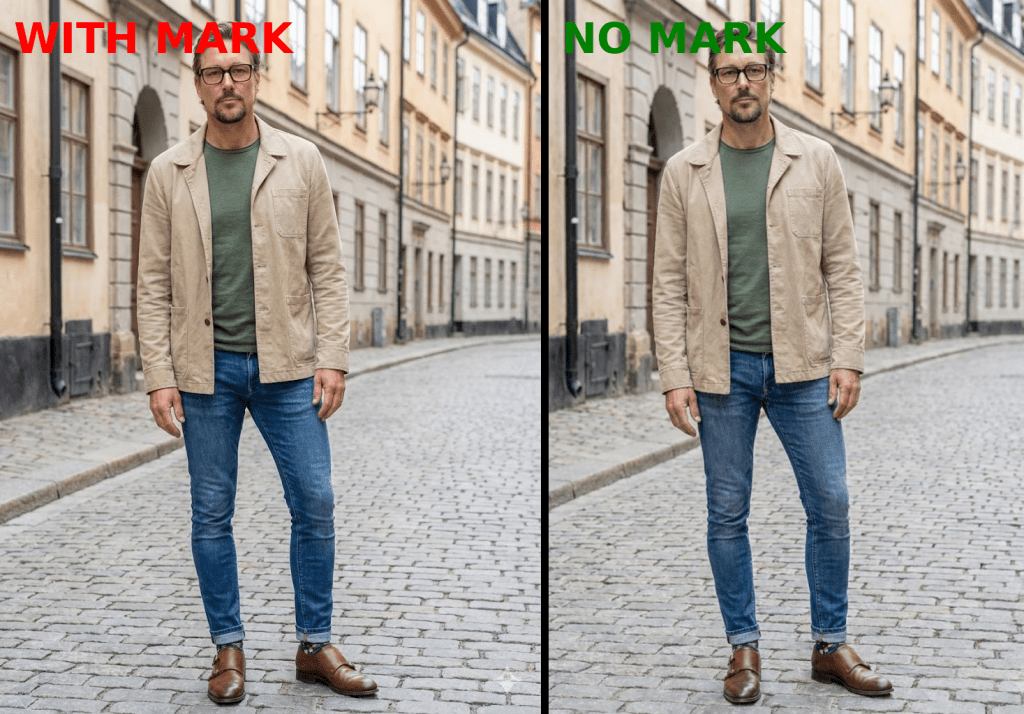
You can access it through Gemini’s “Create Images” flow with a thinking mode selection, and then tiering kicks in of course. Free users get a taste, paid users get more, but everyone ends up with watermarks in the end. SynthID sits invisibly in the output, and some tiers get a visible sparkle watermark, so your image can look both professional and vaguely sponsored by a glitter factory.
It also supports multi-image inputs for consistency across characters and faces, plus controls for camera angle, focus, and color grading and that is actually a cool feature if you like to cosplay as Tarantino, but minus the paycheck and with more knobs.
Back to the story.
Mixboard, yes.
You click “New project”, hit the little plus button, and that’s the tell-tale sign that something is about to happen to your time, your files, and your remaining belief in human-crafted design.
So, now we’re here. Let’s do a little demo.
I typed this prompt:
“Create a 12-13-slide teaching deck explaining the Transformer architecture to beginners. With beautiful visuals. Include a high-level architecture, embeddings, positional encoding, self-attention, multi-head attention, feed-forward layers, residuals, layer norm, and output projection. One diagram per slide. Add one worked mini-example of attention with small matrices. End with 5 comprehension questions that even my Weiner can understand.”
Then I land on the board, where I start feeding it PDFs and images. It choked on a docx for me too, so I gave it PDFs and watched it pretend that was the plan all along. There’s a little progress indicator in the top right that tells me when I’ve donated enough files to the God of algorithmic power, and it flips to “Ready” when it thinks it has enough. Apparently, I can also upload nothing and let Nano Banana Pro “grab plenty” (their own wording) based on my prompt. That is adorable phrasing for “it goes shopping in the world’s loudest library and returns with a bag of opinions.”
When I click Ready, Mixboard starts cooking. It claims it needs around 20 minutes, which is the kind of estimate that belongs in the same museum as “quick meeting” and “final version”, because it took way longer. But time spent equals tokens burned and tokens burned equals high quality. So no, you don’t hear me complain about it.
And then the deck shows up in the same window and I can actually present from there, or download it as a PDF or a stack of images. No PowerPoint file of course, and no editable slides because it generates images. Just a neat little bundle of finished story.
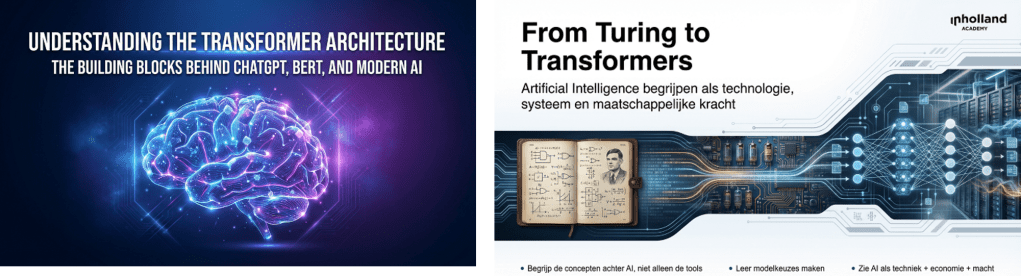
The result actually impressed me. Not as good as when I use Manus, to be honest (see my title slide of the course “From Turing to Transformers” – the one on the right), but this is waaay cheaper.
Some slides were unnervingly on point and others the kind of poetic nonsense that sounds profound until you read it twice and realize it means absolutely diddley squat.
One slide in my Transformer deck presented this gem:
“Imagine a model where every token is placed with purpose. This is the world of attention, an experience designed to be perfect, right out of the box.”
That first sentence is a hostage note written by a marketing model with a minor ketamine hobby and a premium typography subscription.
So I snuffed this one.
The rest was fine though. Look at the one below for instance.
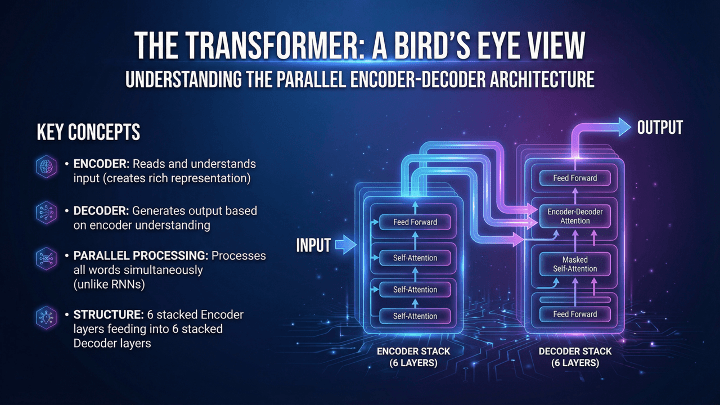
If you want to download the entire slide deck, you can do so over here: https://docs.google.com/presentation/d/1ILQG9DWgSaK4b9vkHDopftW3OC43vQb6/edit?usp=sharing&ouid=109244719980839404968&rtpof=true&sd=true
Oh, one last tip, If you want the whole thing to sing, you keep your prompts concrete. Slide count, audience level, required metrics, layout constraints, and a single job per slide. Mixboard acts far less philosophical when you give it rules and a smaller sandbox. Like my Weiner (dog).
Signing off,
Marco
I build AI by day and warn about it by night. I call it job security. Big Tech keeps inflating its promises, and I just bring the pins and clean up the mess.
👉 Think a friend would enjoy this too? Share the newsletter and let them join the conversation. LinkedIn, Google and the AI engines appreciates your likes by making my articles available to more readers.
To keep you doomscrolling 👇
- I may have found a solution to Vibe Coding’s technical debt problem | LinkedIn
- Shadow AI isn’t rebellion it’s office survival | LinkedIn
- Macrohard is Musk’s middle finger to Microsoft | LinkedIn
- We are in the midst of an incremental apocalypse and only the 1% are prepared | LinkedIn
- Did ChatGPT actually steal your job? (Including job risk-assessment tool) | LinkedIn
- Living in the post-human economy | LinkedIn
- Vibe Coding is gonna spawn the most braindead software generation ever | LinkedIn
- Workslop is the new office plague | LinkedIn
- The funniest comments ever left in source code | LinkedIn
- The Sloppiverse is here, and what are the consequences for writing and speaking? | LinkedIn
- OpenAI finally confesses their bots are chronic liars | LinkedIn
- Money, the final frontier. . . | LinkedIn
- Kickstarter exposed. The ultimate honeytrap for investors | LinkedIn
- China’s AI+ plan and the Manus middle finger | LinkedIn
- Autopsy of an algorithm – Is building an audience still worth it these days? | LinkedIn
- AI is screwing with your résumé and you’re letting it happen | LinkedIn
- Oops! I did it again. . . | LinkedIn
- Palantir turns your life into a spreadsheet | LinkedIn
- Another nail in the coffin – AI’s not ‘reasoning’ at all | LinkedIn
- How AI went from miracle to bubble. An interactive timeline | LinkedIn
- The day vibe coding jobs got real and half the dev world cried into their keyboards | LinkedIn
- The Buy Now – Cry Later company learns about karma | LinkedIn

 Portfolio Marco van Hurne
Leave a comment