Another week, another aneurysm – last week we had Cloudflare face-planted so hard it took ChatGPT, X, transit systems, and half the civilized web down with it. To me, this proves once again that the internet is basically held together by bubble gum, prayers, and one overworked engineer named Kyle who hasn’t slept since 2019.
Remember this image from one of my recent posts?
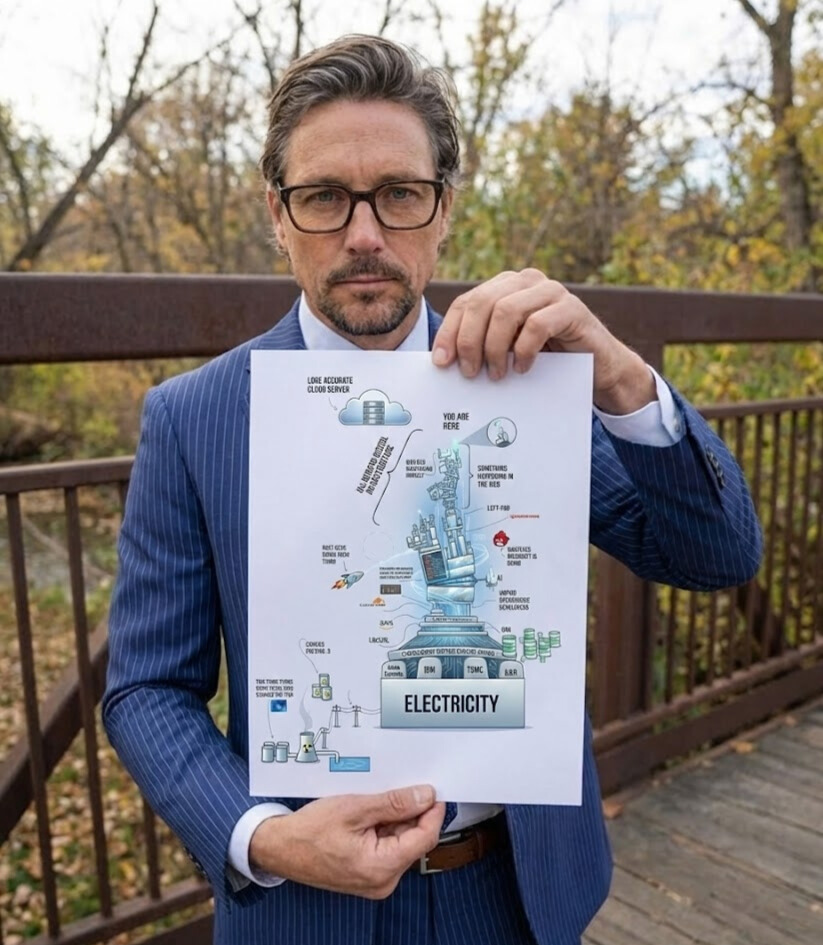
Yeah, this is basically what I call the “leaning tower of PisAI” and it is the world’s pretties diagram of how everything goes to hell the second that one layer decides to go AWOL. It’s a Jenga stack of doom, it runs perfectly until it is not. The water runs dry, the electrons refuse to do their little stadium-wave dance, the datacenter has a meltdown, the OS eats a bad patch, the content-delivery network pushes an update from the seventh circle of hell (hi Cloudflare), your ISP gets pancake-flattened by hackers, and finally those charming local junction boxes that half the country likes to blow up around New Year’s Eve just for kicks.
It’s already bad enough when your home internet dies for two hours because a rat sneezed near a transformer. But imagine the whole thing going down. Not just your street. Not just your city. I mean everywhere. Imagine the entire internet keel-hauling itself into the oblivion indefinitely because of a cyberattack, grid failure, or – knowing how things go – someone at the federal government forgot to pay the bill. Again.
Do you have a plan for that?
No? Of course you don’t.
Most people don’t even have a plan for dinner, let alone “the internet has died, welcome to the apocalypse”. I wrote about one event that is long overdue that might actually cause such an outage, read: Icarus bought Wi-Fi and now we won’t have to worry about AI anymore. And with all these geo-political stuff going on, and hackers everywhere trying to score points, it’s only a matter of time before the sap of life will start drying up.
And with all the geopolitical LARPing going on worldwide, plus some hackers scurrying around trying to earn leaderboard points, it’s only a matter of time before the sweet sap of civilization starts drying up.
FEMA† actually surveyed Americans and found that 57% of the country isn’t prepared for anything. Say whatnow? The land of preppers, Big Tech bunker-builders, doomsday TikTokers, and the land of apocalyptic zombie-outbreaks… turns out to be catastrophically unprepared.
Sad.
And hilarious. A bit of both.
A bit of both, really, after the first signs of trouble, the nation starts hoarding tactical bacon and night-vision goggles but somehow forget to buy water.
Security analyst Robert Siciliano said it’s not a matter of if – it’s a matter of when. The power grid is 120 years old. That’s older than the bread in my Wesco. Older than your grandma’s sense of humor. And it breaks constantly, like it’s trying to send a message.
He says everyone should prep.
Everyone.
Even you, reading this with your 3% battery and zero plans.
† Stands for Free Entertainment for Major Apocalypses. They show up late but with HBO+ DRAMA.
More rants after the messages:
- Connect with me on Linkedin 🙏
- Subscribe to TechTonic Shifts to get your daily dose of tech 📰
- Please comment, like or clap the article. Whatever you fancy.
Surviving without crying about your Wi-Fi
And honestly, the man is right. The word “prepper” only has a bad reputation because for years it meant “guy living in the woods with 400 cans of beans and fantasies of becoming Mad Max”. But now it basically means “anyone who doesn’t want their life to collapse the next time a data center sneezes.”
We all think we’re tech-savvy geniuses until Cloudflare pushes a goofy patch and suddenly half the internet is balder than my patience.
So what do the experts actually say, like, in plain English?
They say you need a backup internet plan, because the moment your fiber stops pushing photons, your entire personality goes with it. A phone hotspot will save you for a few hours, as long as the cell towers themselves aren’t melting into the ground, but when everyone else tries the same trick during an outage, I can almost hear you say “why is YouTube buffering?”
That’s why I have a Starlink subscription and I treat it like holy scripture. Yeah, the kind handed down from Mount Musk itself, you know, burning bush and all. I have bought a Starlink mini as a back-up plan for when my local yocal provider starts coughing blood. Sure, it’s pricey, somewhere between fifty and a hundred bucks a month, plus a dish that looks like a minimalist UFO platter designed by a Scandinavian cult, but you bet your ass that when the cell towers are gone, fried, melted, or crying in the corner, Starlink still beams you the internet straight from the sky like it’s performing CPR. If you’re more of a commitment-phobe, you can go for Starlink Roam, which is basically the “situationship” version of internet fifty bucks a month only when you want it, and you can pause it forever like it’s your gym membership. And when society collapses, that little dish will be sitting there waiting for you saying “hey babe, miss me?”
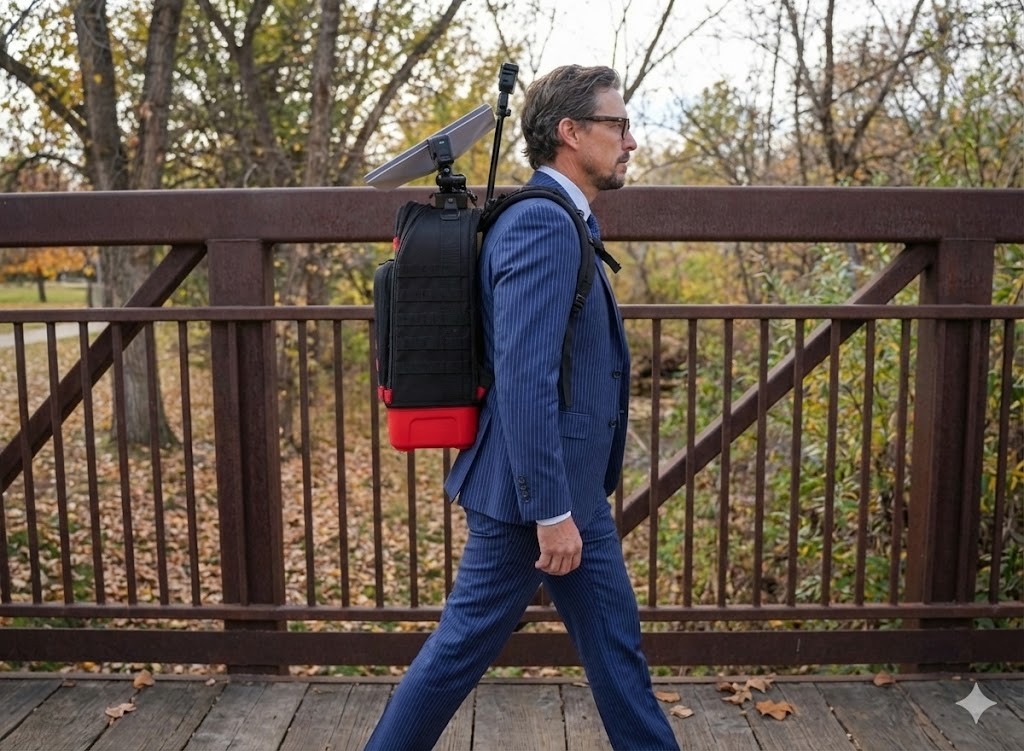
Ok, if Elon worship isn’t your kink, you can always go for HughesNet or Viasat, those are satellite ISPs for people who want internet from space without sponsoring a billionaire’s next rocket explosion. They’re slower and a little clunky, but hey, they work when everything on Earth is dead, sizzling, or smoking. Yes, extreme weather can still knock them out, but once the skies calm down, your internet comes back, and that is more than you can say for the cell towers that folded like my cheap garden chairs during the last November storm.
Of course, none of this matters if you have no electricity.
Duhuuuh.
A backup internet plan without power is a Ferrari with no engine. It’s useless, and embarrassing. A dead phone in an outage is nothing more than a brick full of disappointment and your regret because you didn’t prep.
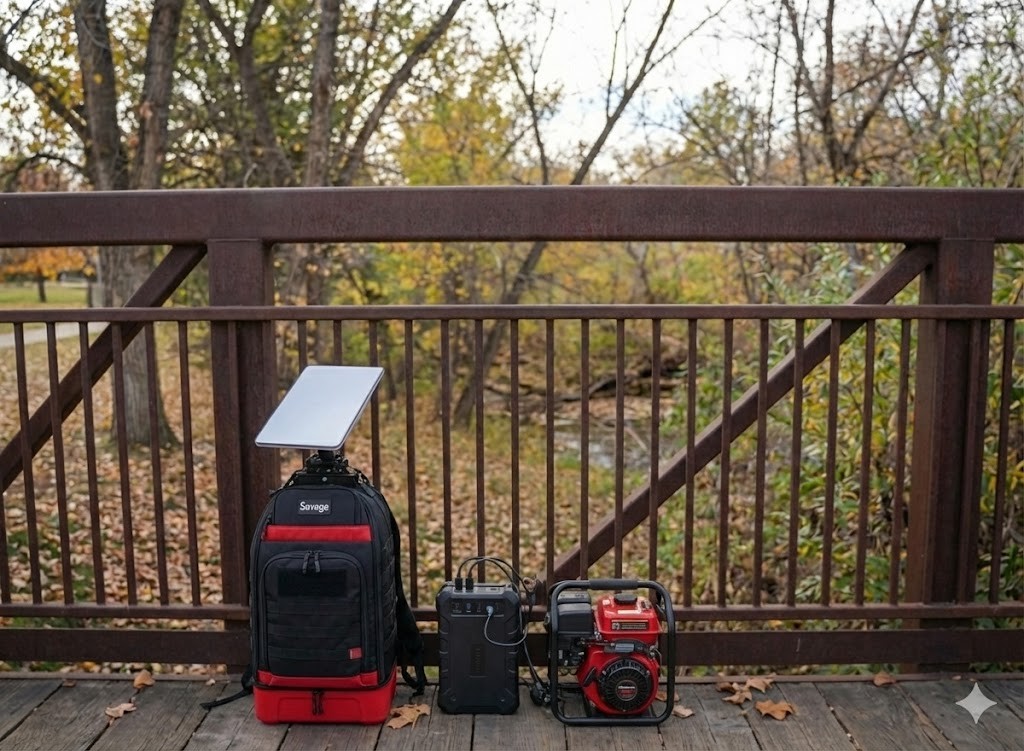
So you actually need power banks. And I don’t mean the tiny panic bricks you take on vacation, but the beefy battery boxes that can keep your modem, laptop, phone, and your will-to-live functioning. Portable power stations are generators but without the fumes, but if you prefer the old-fashioned “I enjoy the smell of carbon monoxide” approach like me, well, traditional generators still work too. I have one in the back of my truck (LandRover, yeah baby), just in case I decide to go camping and sleep in a tent on the roof because the dikes broke again (sic). Just maybe avoid gassing your family with carbon monoxide unless you want to become a cautionary tale on the evening news. Oh, and if you do want to go for a backup generator. Don’t forget to buy a can of gas, ya doofus. And while your at it a bit of oil and spark-plugs.
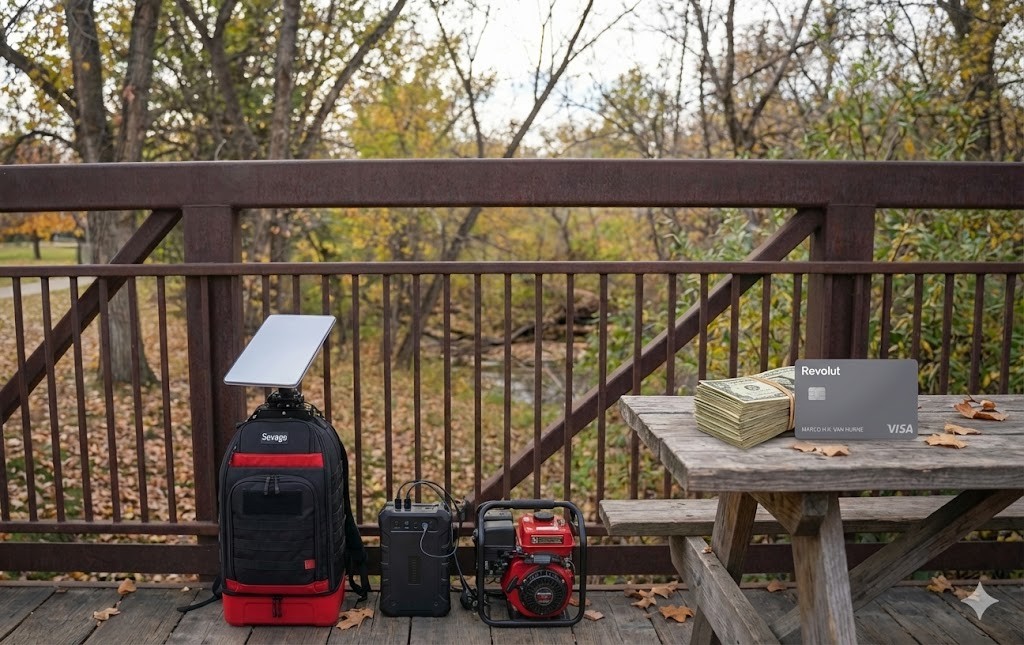
Then there’s the thing everyone hates to mention. Cash. Moolah. Real, physical, smelly and wrinkly cash. I know it feels like traveling back in time to the Bronze Age, but when the internet dies, your card reader dies with it. Your bank app, Apple Pay, they’re all useless. Do you see yourself standing in a grocery store with a useless piece of aluminum and glass, debating whether to barter emotional support for bread? Yeah, that’s exactly my point. So, a little emergency cash tucked away is the difference between “I can buy food” and “I now live in a barter-based dystopia”. Some people even keep prepaid debit cards (Revolut) in a separate drawer so they have a backup way to buy gas or supplies if their main bank goes offline.
And because humans are social creatures, or at least like to pretend they are, the biggest tool you have is communication. When the internet dies – and it will – you’ll want to check on your loved ones to see whether they’re safe, panicking, or sitting in the dark making baby-noises at their routers. That’s why you need something resembling a “pre-internet failure family plan”.
Figure out where you’d meet, when you’d check in, and who becomes the designated message-relay person. And yes, laminate it, because paper is the only “device” that doesn’t crash or requires charging, or update itself into oblivion like Cloudflare. If you want the premium version of sanity, get a satellite messenger like Garmin inReach, which lets you text even when the entire cell network is out. Ok, it’s expensive, I know, so I went hunting for an alternative, something cheap, nerdy, and indestructible.
The LoRa phone.
And no, it’s not a real “phone” as in “calls mom and disappoints her”. It’s a pocket-sized radio gremlin that lets you text other radio gremlins when literally everything else is dead.
I bought the LILYGO T-Deck, and it looks like a BlackBerry that got married with a Game Boy and then got left behind at a hacker convention. It has a tiny keyboard, a tiny screen, and a LoRa module that lets you send text messages without cell towers, without Wi-Fi, without satellites, just pure radio waves. As long as someone else nearby (1-3 km) has one, you can chat, coordinate, whatever. Perfect for emergencies, and hiking.
It runs on open-source software, charges with USB-C, and it doesn’t rely on Silicon Valley behaving. It doesn’t rely on Amazon Web Services not catching fire. It doesn’t rely on Elon remembering to pay a bill. This thing works even when every GSM mast goes on a “coffee break”.
Most people will be screaming at their routers.
You’ll be out there texting through the apocalypse like it’s a regular Tuesday.
My next upgrade is the Ulefone 26 Ultra, because this beast has a brutal battery, and it keeps working even when the cell towers decide to take a national holiday. It is a real smartphone, so it also works when society is still running smooth, and it has a built-in pro radio, like real DMR/LMR stuff. So if another Ulefone is nearby, you can talk directly, tower or no tower, apocalypse or no apocalypse. It’s a smartphone that moonlights as a walkie-talkie, and when the network dies (again), at least this thing won’t sit there uselessly.

The truth is painful, yet simple. Civilization works beautifully right up until the moment that it doesn’t. When the grid is down, people who are prepared look like geniuses. When it doesn’t hiccup, at least you’ve got a Starlink dish and a power station, which is more than your neighbors have while they sob over their useless Wi-Fi.
So prep. Not because you’re paranoid, but because Cloudflare quite literally took the internet down last week, and nobody deserves the horror of trying to Google “help” while offline.
Now stop pretending you’re not enjoying this.
Signing off,
Marco
I build AI by day and warn about it by night. I call it job security. Big Tech keeps inflating its promises, and I just bring the pins and clean up the mess.
👉 Think a friend would enjoy this too? Share the newsletter and let them join the conversation. LinkedIn, Google and the AI engines appreciates your likes by making my articles available to more readers.
To keep you doomscrolling 👇
- I may have found a solution to Vibe Coding’s technical debt problem | LinkedIn
- Shadow AI isn’t rebellion it’s office survival | LinkedIn
- Macrohard is Musk’s middle finger to Microsoft | LinkedIn
- We are in the midst of an incremental apocalypse and only the 1% are prepared | LinkedIn
- Did ChatGPT actually steal your job? (Including job risk-assessment tool) | LinkedIn
- Living in the post-human economy | LinkedIn
- Vibe Coding is gonna spawn the most braindead software generation ever | LinkedIn
- Workslop is the new office plague | LinkedIn
- The funniest comments ever left in source code | LinkedIn
- The Sloppiverse is here, and what are the consequences for writing and speaking? | LinkedIn
- OpenAI finally confesses their bots are chronic liars | LinkedIn
- Money, the final frontier. . . | LinkedIn
- Kickstarter exposed. The ultimate honeytrap for investors | LinkedIn
- China’s AI+ plan and the Manus middle finger | LinkedIn
- Autopsy of an algorithm – Is building an audience still worth it these days? | LinkedIn
- AI is screwing with your résumé and you’re letting it happen | LinkedIn
- Oops! I did it again. . . | LinkedIn
- Palantir turns your life into a spreadsheet | LinkedIn
- Another nail in the coffin – AI’s not ‘reasoning’ at all | LinkedIn
- How AI went from miracle to bubble. An interactive timeline | LinkedIn
- The day vibe coding jobs got real and half the dev world cried into their keyboards | LinkedIn
- The Buy Now – Cry Later company learns about karma | LinkedIn

 Portfolio Marco van Hurne
Leave a comment