Let’s start with the TL;DR for a change. A bunch of billionaires who got rich from selling us AI and shit, decided that the only thing standing between them and paradise was everyone else. So they packed up their libertarian manifestos, and their God complexes, and went shopping for a country that wouldn’t sue them for experimenting on humans.
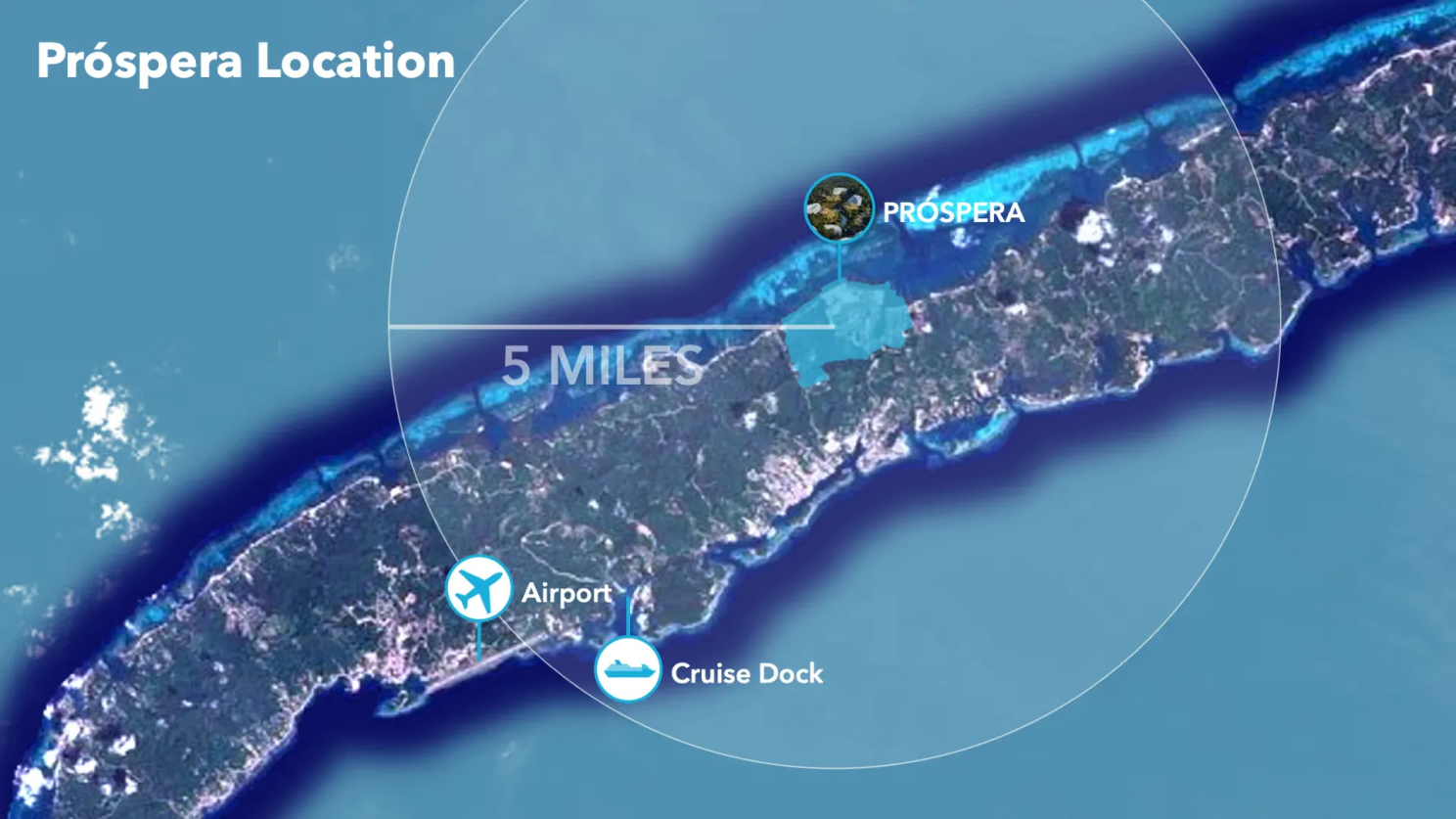
They found it, floating lazily off the coast of Honduras.
It’s a place that’s so hot it fries your ethics on contact.
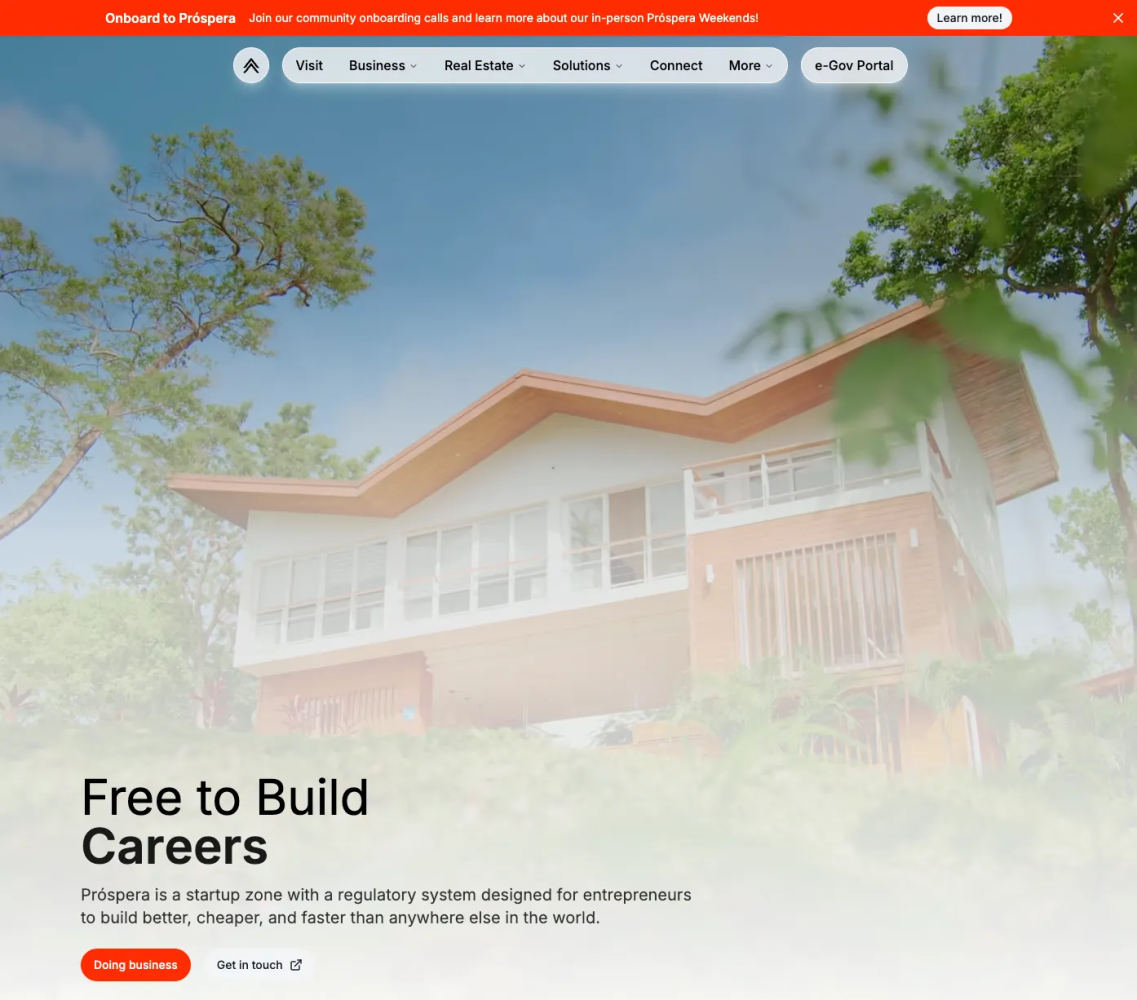
And like every self-anointed explorer with Wi-Fi and venture funding, they planted a flag in borrowed sand and christened it Prospera, because “Tax Haven Beta” didn’t look as good on the brochure. Prospera is a real-life “startup nation” where every billionaire’s wet dream comes with beachfront property and of course zero taxes. Their marketing calls it “a governance innovation hub”.
The locals call it “foreigners with cranes”.
More rants after the messages:
- Connect with me on Linkedin 🙏
- Subscribe to TechTonic Shifts to get your daily dose of tech 📰
- Please comment, like or clap the article. Whatever you fancy.
Prospera – The sandbox republic
If the 20th century belonged to nation-states, the 21st belongs to people rich enough to skip them. Prospera is exhibit A, it’s a private city, a corporate experiment, and possibly the world’s first attempt to run civilization like a startup in perpetual Series B.
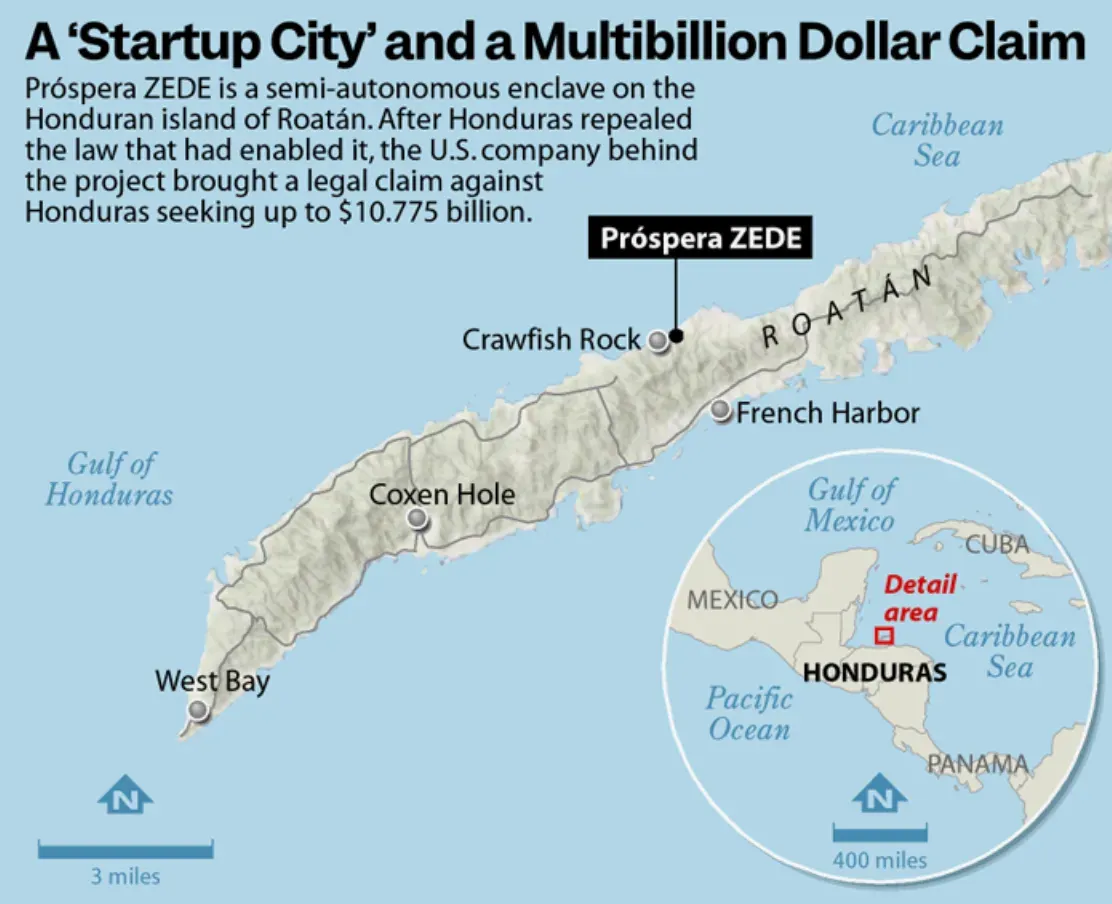
Prospera is built on the Honduran island of Roatán, where it occupies a legal gray zone roughly the size of a medium airport lounge. It’s marketed as the future of governance, a place where red tape is replaced by “efficiency”, where taxes barely exist, and everything else, like land, law, and labor, is mediated through an app.
No joke.
Not a metaphor either.
Prospera’s charter was literally written in code.
The city operates under its own “juridical operating system”, which is a mix of blockchain contracts (sic!), and imported Anglo-American common law mixed with private arbitration panels. And yes, local Honduran statutes stop at the border, like old software unable to run on the new system.
And inside of the country, it’s pure sandbox mode.
Here’s a video on it:
Governments are slow and billionaires are impatient
The founders are an orbit of libertarian entrepreneurs and ex-Silicon Valley engineers, and they claim they built Prospera to “reinvent governance from first principles”. Basically, they kinda wanted to run society like a startup without the hassle of elections, and in their manifesto, they promise a frictionless world where regulation is minimal, citizens are “shareholders”, and prosperity scales at cloud speed.
They call it “voluntary governance”.
You opt in to rules the same way you accept terms and conditions → scroll fast, click agree, hope for the best.
I must say that their pitch is rather seductive. They promise less corruption (uh-huh), more innovation (sure), and the subtext is even louder, with fewer taxes, fewer labor laws, fewer journalists asking questions.
Within Prospera’s pristine boundaries, you can open a company in 24 hours. No permits needed and surely no bored clerk asking for photocopies where you always look like you just came out of prison. Here, you just click “Incorporate” and watch your future load. . .
The thing that is most attractive to startups and other companies with low ethics standards, is that you can perform medical research that would get you jailed elsewhere. You can test autonomous drones, gene-editing therapies, even prototype weapons, as long as your lawyers can phrase it as “non-lethal R&D”.
And yes, even Sam the Scam’s Orb is allowed here. Read: I saw Sam Altman’s iris-scanning “Orb” and we should all be scared as f*** | LinkedIn
The boardroom in the sky
Prospera is not governed by a president or a mayor. Nah, that would be too democratic. It’s run by a holding company registered in Delaware (because of course it is). At the top sits Honduras Prospera Inc., a corporate entity whose shareholders include Silicon Valley investors, political idealists, and at least one ex-Bitcoin evangelist now calling himself “Chief Governance Architect”.
They call their leaders “Council Members”, and each holds veto power over entire sectors like health, law, infrastructure, defense. They kinda act like cabinet ministers, but I’m guessing with stock options and better suits.
Residents are officially called “participants”, and they don’t vote. Of course. Instead, they get to “ratify updates” to the city’s “charter”, which is a set of smart contracts that describe everything from property rights to conflict resolution.
I’ve got a befitting name for it: the Constitution-as-a-Service model, and governance is pushed by software update.
If a dispute arises, it’s not Honduran courts you face, but it’s private arbitration panels hired by the same system that regulates you, instead. Just imagine suing your landlord in a courtroom owned by your landlord.
Efficiency, they call it.

A legal wormhole
Prospera was born out of a Honduran law called the ZEDE framework → Zonas de Empleo y Desarrollo Económico, or “Employment and Economic Development Zones”. Now, back in 2013, the government was desperate for investment, and passed a legislation that allowed private jurisdictions to operate semi-autonomously.
The idea was to attract business by offering corporate-friendly micro-governments inside Honduras. Investors would bring capital, Honduras would get jobs.
A neat theory, until the country realized it had effectively franchised its sovereignty.
When the ZEDE law was repealed in 2022, Honduras tried to shut the project down. But Prospera’s lawyers were armed with international arbitration treaties and the full confidence of white-collar immortality, and they fought back. They claimed contractual rights for 50 years of autonomy, enforced by treaties signed under the previous regime.
So, the Honduran government cried, and called it a violation of national sovereignty, but Prospera called it wat it is “legal continuity”.
That’s what you get when selling off your soul.
Now don’t you start whining now.
Startups go to transcend ethics
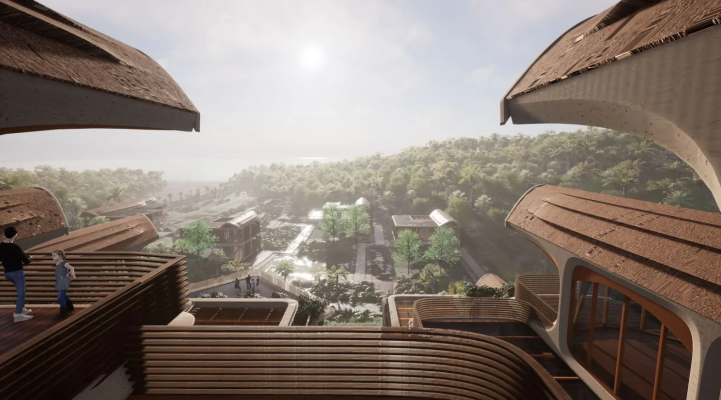
This place is built as the ultimate freedom zone for the founders. It’s a city that is actually designed much like an API where you plug in your idea, deploy it to reality and skip the paperwork.
The crown jewel of the island’s innovation scene is Nova Vita, which is a regenerative medicine clinic that looks kinda like an Apple Store, but for stem cells. Its labs are climate-controlled, with white glass and humidity sensors, and they’re humming at a temperature calibrated for immortality.
Dr. Sarah Chen runs the place. I could not find her anywhere online, but according to the company she is a bioengineer and she has the calm confidence of someone who’s cured herself of paralysis and decided the rest of humanity should catch up. Her company’s slogan is “Rebuild the body like you rebuild code”.
I kid(ney) you not (stupid pun).
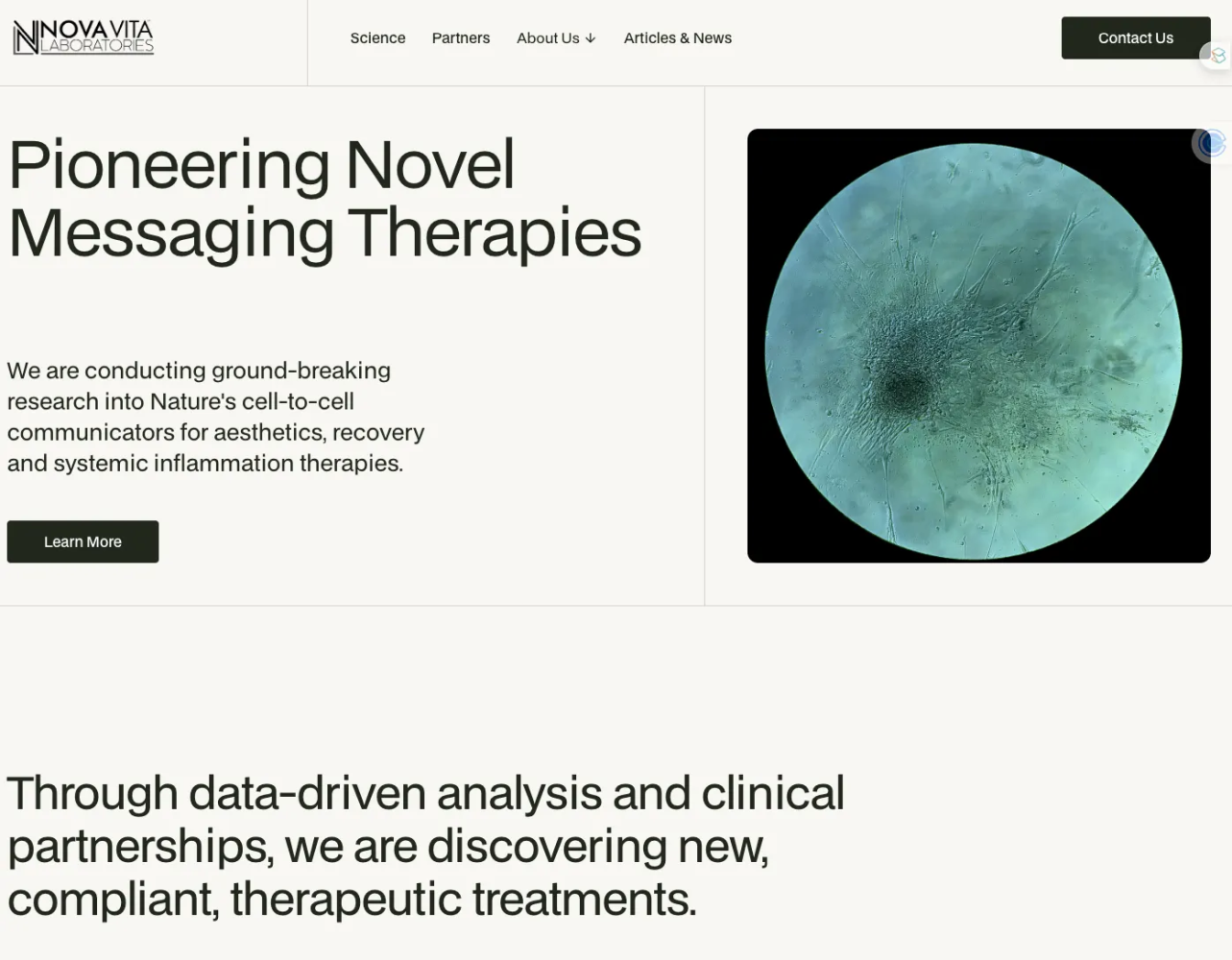
And of course, everyone on Prospera doesn’t have a social security code, but they do have a unique elevator pitch. Sarah puts it like this “We sell regenerative tissue therapies grown from menstrual stem cells, bone marrow, and “other renewable human materials”. The donors (women, of course) are paid, the ethics are “handled privately” (cash, no strings attached) and the regulatory approval process is basically an honor system.
“In the U.S., this research would take a decade”, was what she said in an interview. “Here, it’s already in human trials”.
She says it like it’s progress. But to me, it also sounds like a warning label.
And their waiting room is a who’s who of global wealth, full of people who’ve already replaced their knees, their hips, their identities, and now want a new lifespan. Prospera sells longevity like others sell condos. It’s what I’m now calling medical tourism 2.0, you fly in, patch your DNA, post a selfie about “living limitless”.
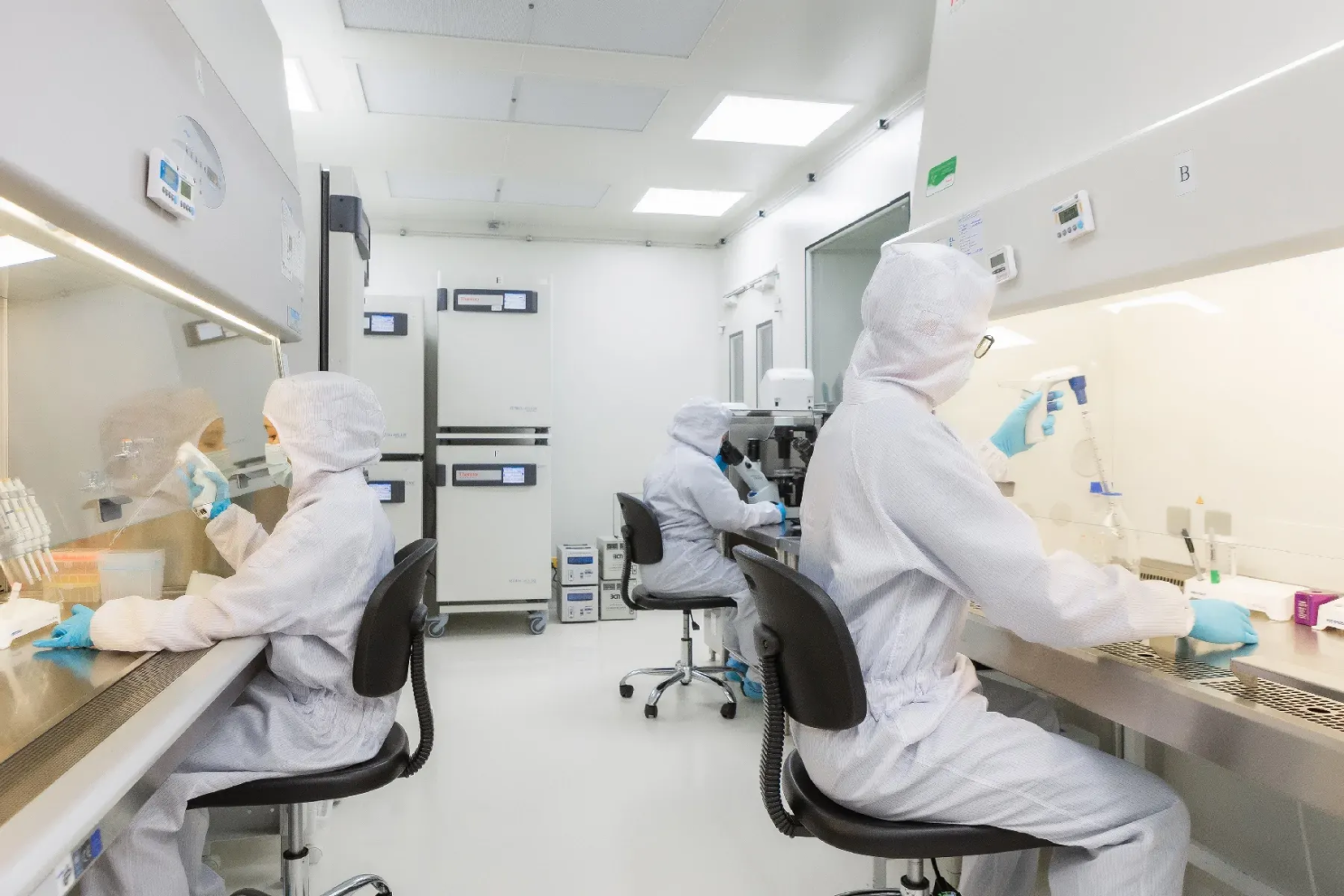
Maybe Prospera’s Nova Vitae probably was, what Putin and Xi were talking about when a ‘hot mic’ captured them whispering “In the past, people rarely lived to be 70, but these days they say at 70 you’re still a child” (Xi). And Putin responded “Biotechnology is continuously developing. Human organs can be continuously transplanted. The longer you live, the younger you become, and perhaps you can even achieve immortality”. Xi also said that “some predict that in this century humans may live to 150 years old”.
And this is no gossip, because at a press conference afterwards, the Putin-man confirmed he had discussed longevity with Xi. He also said that modern medical/organ-replacement methods “allow humanity to hope that… life expectancy will increase significantly”.
Yeah, only for the 1% of course, who can afford regenerative stem cell therapy and a body clone for organ harvesting. Ever seen the movie “The Island (2005)?” – in which a facility raises human clones as “insurance policies” so their wealthy originals can harvest their organs later, that is, until the clones discover they’re next in line for “renewal”.
Cool movie, but I digress.
The Fintech fiesta
A few blocks down from Nova Vitae, you can find Atlas Ledger. It hums in a glass cube above the sea. They say that it’s a “token liquidity infrastructure hub” according to their brochure, which to me, honestly says nothing at all. I think this is just Fintech startup code for “we trade things nobody understands”. But on the inside, you see traders lounge in beanbags, and watching dashboards full of color-coded coins with names like Solivra, NeuraCoin, and YachtDAO. None of them exist in any recognized financial system, which, is exactly the point, I think.
“Regulators are old-world institutions”, says one of the co-founders “Luca” (I’m thinking it’s an alias), who used to work at JPMorgan before he discovered spiritual decentralization. “We’re building a permissionless economy”.
No shit sherlock.
In Prospera’s Sodom and Gomorra of business ethics you don’t have any oversight, no taxes, and . . . no refunds.
Atlas Ledger claims to have “reinvented trust”, but in practice, they just rebranded risk. Transactions fly across private ledgers. And when you say “Hey, this looks like a Ponzi scheme”, you’re not actually insulting them – it’s a business model.
Then there’s CerebrumX, and they are quite the ambitious startup. Their stated mission is “to digitize consciousness by 2030”.
Check, check, double-check. Um, yeah, uh, it really says so . . .
The thing with CerebrumX’ claim is that it ain’t new, but it’s never been done though.
There’s another company called Neuroba who is exploring if consciousness can ever be “uploaded”, the holy grail of neurotech where neurons meet code. This premise is kinda sci-fi but it is actually rooted in genuine research. If human awareness arises purely from physical brain activity, then mapping and emulating that 86-billion-neuron orchestra inside a computer might, in theory, recreate the mind itself.
But the challenges are monumental. Scientists can observe neural patterns through tools like fMRI and EEG, but translating those images into subjective experience – the feeling of being – remains what philosopher David Chalmers calls the “hard problem of consciousness”.
Even if the brain could be scanned and simulated perfectly, would that digital echo still be you or just a perfect imposter?
CerebrumX says that it’s building the scaffolding through advanced brain-computer interfaces, AI, and even quantum communication. Yes, what Noel Skum’s doing with his Neuralink project. They’re all hoping that one day there’s going to be a bridge between human cognition and machines.
Now why would a company like Cerebrum set up shop in Prospera?
. . . Because it offers the one thing every neurotech firm lusts after. Freedom from oversight.
Mind uploading is ethically radioactive. Who owns a digitized consciousness, the person or the company hosting it? Is an upload really you or just an exquisite copy that thinks it’s you? Can a digital mind suffer, be exploited, or be forced into “service”?
And in countries with functioning bioethics laws, these questions would stall projects for decades, but in Prospera, regulation is optional and consent is a checkbox. CerebrumX can map brains, store cognitive data offshore, and experiment on the edge of legality without pesky FDA panels or European data auditors asking about souls.
And that’s why their office is underground, literally, in a cooled bunker where the servers hum like monastic chants, because their operation probably cannot stand the light of day. And in this bunker, ffthey’re mapping the brain at microscopic resolution, and turning neurons into data structures and running simulations of thought patterns that twitch like living things.
“Each brain is a universe”, says Marcus, the founder. “We’re trying to preserve them before biology shuts them down”.
He says it with such conviction you almost forget he’s talking about souls as datasets.
They’ve already uploaded partial “consciousness states” of volunteers. They got short bursts of recorded brain activity that can be replayed on a neural emulator.
“Death,” Marcus says, “is an outdated protocol.”
Of course, nobody mentions what happens to those thought patterns when the funding dries up. Will they just unplug a dozen digitized minds and call it pivoting the business model?
The real estate religion
The second-largest industry after hubris is real estate. Prospera is crawling with developers who speak in a strange dialect of eternal sunshine.
They call it “entrepreneurial sovereignty”, which means “you own property in a legal system we invented”. There are brochures for “Founders’ Towers”, “The Liberty Residences”, and “Elysium Bay, Where Freedom Meets Fiber Optic”.
OMG – ELYSIUM… you’ve seen it, right?
That dystopian movie where the rich live in a luxury halo while everyone else rots below?
Yeah, that one.
I think the film was a preview. Or maybe Prospera just took notes and decided, “Hey, let’s build that, but with a different branding”. The parallels are uncanny as well, it is an off-world privilege, on-world labor, and technology driven society that can heal anything (regenerative stemcell shit) if you can afford the entry fee. Watch that trailer again and tell me it doesn’t look like a real estate promo straight out of Roatán.
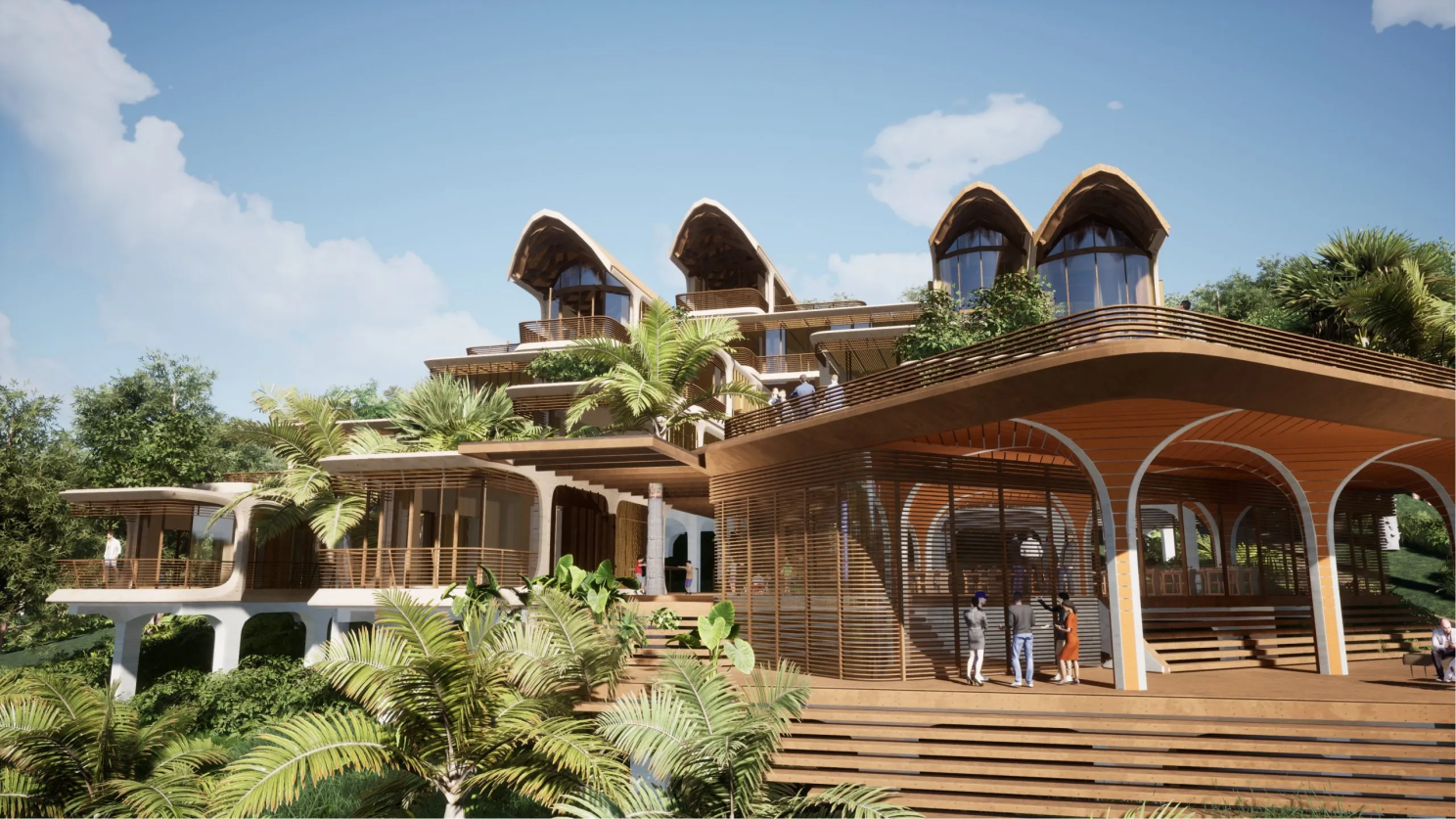
But for the rest, every building looks the same, with white concrete, mirrored glass, and balconies that really are designed for drone delivery. The floor plans all say “oceanfront privacy” and “governance-free living”.
Kid you not.
A local joke goes “Buy in Prospera, and you get plausible deniability”.
Investors love it. Land speculators love it.
The Honduran fishermen watching their beaches disappear, well, less so.
The schools of the future (and of the elite)
Even the kids are startups here. The Prospera Academy is a glass campus with indoor palm trees and AR headsets instead of textbooks. The walls display inspirational quotes like “Learn to innovate or be automated.”
The curriculum blends “innovation literacy”, coding, and self-branding (sic!). Students learn how to pitch startups before they can even drive. One project they’re working on is called a biodegradable crypto wallet, and another, a gamified empathy simulator (ironically failing to work).
The teachers are imported from Boston, Singapore, and Palo Alto. The tuition costs more than most Hondurans make in a year. Classes are conducted in English, and Spanish is taught as a “local outreach skill”, but is not a mandatory class.

This school is basically Montessori meets Wall Street. The children practice elevator pitches instead of multiplication tables. Man, I think even their recess looks more like a design sprint than a real vacation.
“Here we nurture the next generation of founders,” says the headmaster proudly in a promo.
“And who’s going to be the next generation of workers?” I hear myself ask.
And as if we had a telepathic link, he blinks and says “Automation will handle that”.
Virginia is Prospera’s success story.
She used to teach English in a cinderblock classroom with two books and one working lightbulb. Now she has a Smårt-börd, a salary, and a classroom that doesn’t leak during storms. So, in the promo, you can see her smile with the kind of relief you can’t fake. “This isn’t charity”, she insists. “It’s business. We need jobs. They need workers who speak English. Everyone wins”.
Her optimism is real. So is her gratitude.
Then you meet Mateo, who is a fisherman whose family’s been here since before Honduras had roads. He stares out at the cranes like they’re storm clouds. “They build”, he says, “then they leave. When the money’s gone, so are they”.
He’s not wrong. The island’s dotted with the bones of old promises, unfinished resorts and half-broken docks.
The rest of the stack
For all its ambition, the Prosperan economy runs on a small but diverse cluster of companies that sound like parodies of themselves
- OceanMind Analytics. This company uses AI to predict fish migration, then sells the data to yacht owners for “sustainable luxury”. For real? Yeah, look for yourself.
- Vitalis BioPrint. A 3D-printed skin for cosmetic procedures and influencer accidents.
- NeuralLux. Markets itself as “mindful lighting for cognitive optimization”, but upon inspection it turns out they’re just selling ethically impaired lamps.
- HavenPay. A payments app that converts between any currency and “liberty credits” whatever the freak that means.
The thing is that all these companies share the same DNA. Tech optimism, moral flexibility, and investor decks that use the word “decentralized” at least nine times.
And every office lobby has a quote from some philosopher, etched in glass.
Sigh.
Most of them never finished reading the book they quoted from.
But for all the buzzwords and venture euphoria, Prospera still runs on Honduran labor. Security guards, cleaners, drivers, cooks. They work behind biometric gates they’ll never be able to afford to live beyond, and outside the glossy zone, kids sell coconuts to tourists, and fishermen mend nets beside construction sites. Inside the enclave, prosperity hums like an air conditioner. Outside, the air is thick with diesel and resignation.
Prospera sells itself as the test lab for the future.
But to me it looks like the future is going to be privatized, trademarked, and moved offshore.
What movie was that again?
Oh yeah . . . ELYSIUM of course, and also Robocop !
Here you go: https://youtu.be/TYsulVXpgYg
Permissionless everything
Prospera’s motto is never officially printed, but I’m sure that it’s universally practiced, is “Ask forgiveness, not permission”.
It’s simply a libertarian utopia, but with fiber optics. There are no central banks, there’s minimal oversight, and yes, governance is sold as a subscription. Everything is self-regulating until, well, it just isn’t.
And when something breaks, say when a bio lab leaks, or a land dispute erupts, or a worker loses everything in a contract clause nobody read, there’s no public court to appeal to. Just arbitration. Efficiency at scale equals optional justice.
Meanwhile, in Tegucigalpa, the Honduran government fumbles between outrage and impotence.
Ministers call Prospera a “violation of the constitution”, but in Spanish, and there are also protesters who are calling it “modern colonialism”. Sigh. You simply cannot escape wokeness.
The President calls it “a national insult”.
Prospera of course is defending itself with a legal claim against the government and is sending out press releases about innovation, sustainability, and “empowering local communities”. (They love that phrase – it’s the PR equivalent of aloe vera.)
But behind the smiles, everyone knows what’s at stake – if Prospera survives, it sets a precedent.
Any country desperate enough for foreign money could sell chunks of itself to private charters and call it progress. Prospera is a prototype. It’s a small petri dish where governance is rewritten by people who think code is cleaner than law.
It’s also a rehearsal.
A simulation of civilization built by people rich enough to treat sovereignty as a startup accelerator. To me, the real question isn’t if Prospera works or not, it’s whether we’ll notice when the rest of the world starts copying it.
Signing off,
Marco
I build AI by day and warn about it by night. I call it job security. Big Tech keeps inflating its promises, and I just bring the pins and clean up the mess.
👉 Think a friend would enjoy this too? Share the newsletter and let them join the conversation. LinkedIn, Google and the AI engines appreciates your likes by making my articles available to more readers.
To keep you doomscrolling 👇
- I may have found a solution to Vibe Coding’s technical debt problem | LinkedIn
- Shadow AI isn’t rebellion it’s office survival | LinkedIn
- Macrohard is Musk’s middle finger to Microsoft | LinkedIn
- We are in the midst of an incremental apocalypse and only the 1% are prepared | LinkedIn
- Did ChatGPT actually steal your job? (Including job risk-assessment tool) | LinkedIn
- Living in the post-human economy | LinkedIn
- Vibe Coding is gonna spawn the most braindead software generation ever | LinkedIn
- Workslop is the new office plague | LinkedIn
- The funniest comments ever left in source code | LinkedIn
- The Sloppiverse is here, and what are the consequences for writing and speaking? | LinkedIn
- OpenAI finally confesses their bots are chronic liars | LinkedIn
- Money, the final frontier. . . | LinkedIn
- Kickstarter exposed. The ultimate honeytrap for investors | LinkedIn
- China’s AI+ plan and the Manus middle finger | LinkedIn
- Autopsy of an algorithm – Is building an audience still worth it these days? | LinkedIn
- AI is screwing with your résumé and you’re letting it happen | LinkedIn
- Oops! I did it again. . . | LinkedIn
- Palantir turns your life into a spreadsheet | LinkedIn
- Another nail in the coffin – AI’s not ‘reasoning’ at all | LinkedIn
- How AI went from miracle to bubble. An interactive timeline | LinkedIn
- The day vibe coding jobs got real and half the dev world cried into their keyboards | LinkedIn
- The Buy Now – Cry Later company learns about karma | LinkedIn

 Portfolio Marco van Hurne
Leave a comment